For many aspiring pilots, one of the biggest career decisions comes long before stepping into the cockpit choosing between college and flight school.
Some future pilots pursue a traditional four-year college degree while completing aviation training alongside their education. Others choose direct-entry flight training programs focused specifically on building flight hours and earning certifications as efficiently as possible.
Both paths can lead to successful aviation careers, but each option offers different advantages depending on your goals, financial situation, learning style, and career timeline.
At Savannah Aviation, students often ask which route provides the best long-term opportunity for becoming a professional pilot. The reality is that there is no single “correct” answer for every student.
In this guide, we’ll break down the major differences between college aviation programs and dedicated flight schools to help you determine which path may be right for your aviation future.
Although both options can help students become professional pilots, college aviation programs and flight schools operate very differently.
College aviation programs combine traditional academic education with flight training.
Students often pursue:
Alongside academic coursework, students complete flight training and aviation certifications.
Many colleges partner with FAA-approved Part 141 flight training programs.
Dedicated flight schools focus primarily on aviation training rather than general college education.
These programs typically emphasize:
Students training at flight schools may complete:
Students interested in professional aviation instruction can learn more about Flight Training Programs at Savannah Aviation.
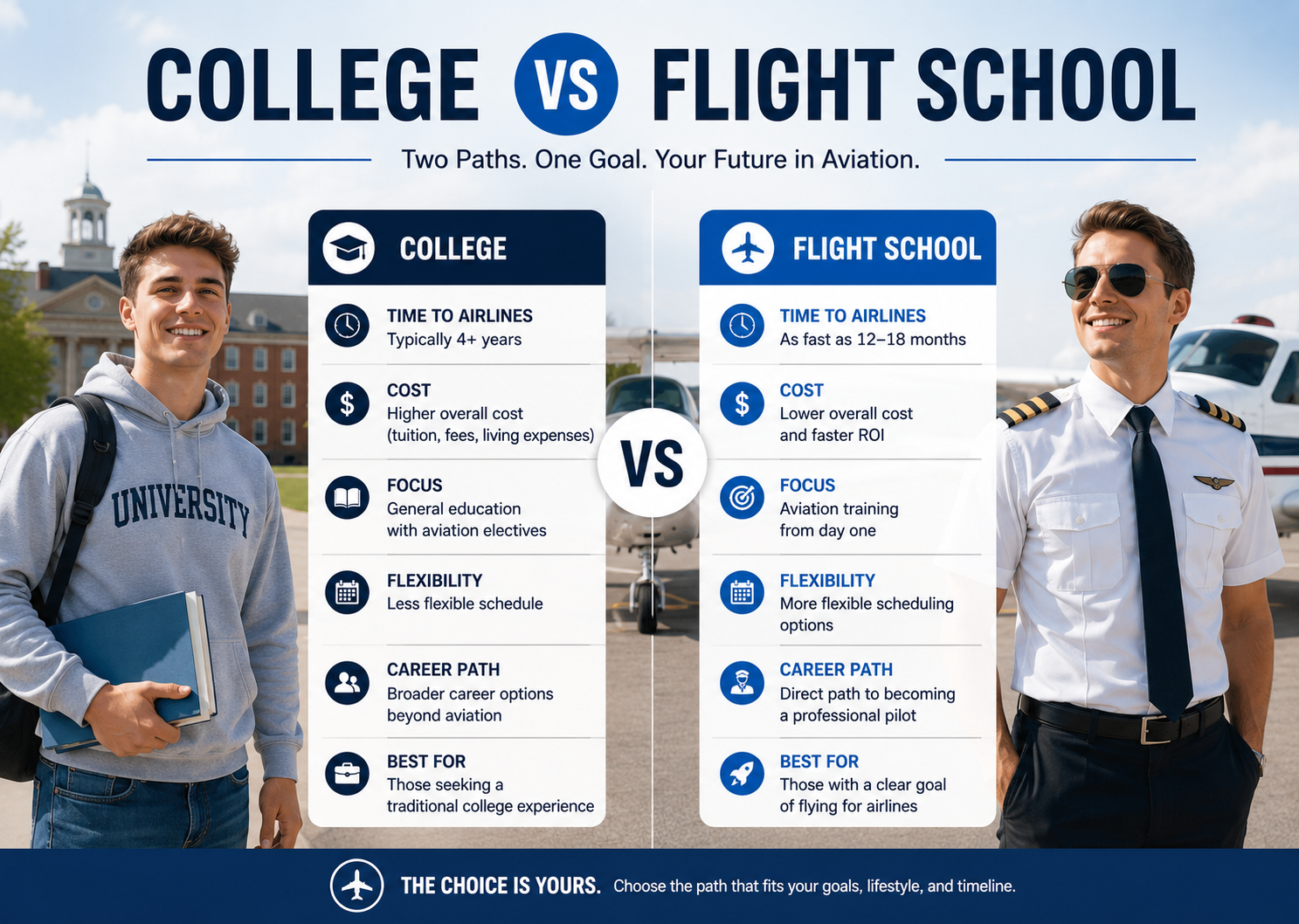
One of the biggest differences between college aviation programs and dedicated flight schools is training speed.
Because flight schools focus specifically on aviation training, many students progress through certifications more efficiently.
Dedicated flight training programs often allow students to:
Students attending accelerated or career-focused aviation programs may complete certifications more quickly than students balancing full college course loads.
However, training speed also depends heavily on:
At Savannah Aviation, students receive scheduling support designed to help maintain consistent progress throughout flight training.
Although flight schools may offer faster training progression, college degrees still provide valuable long-term benefits for many pilots.
A college education may create additional career opportunities both inside and outside aviation.
Some advantages include:
Historically, some major airlines preferred pilots with four-year degrees. While many airlines have adjusted degree requirements in recent years, a college education may still strengthen long-term career competitiveness.
Additionally, aviation careers can change due to:
Having a college degree may provide valuable flexibility if career plans evolve over time.
For many aspiring pilots, cost is one of the largest factors when choosing between college and flight school.
Professional pilot training commonly includes expenses such as:
A Private Pilot License (PPL) in the United States commonly ranges from approximately $12,000 to $20,000 depending on aircraft type, training frequency, and student proficiency.
Additional certifications such as:
can significantly increase total aviation training costs.
When combined with traditional college tuition, housing, and academic expenses, aviation degree programs may become considerably more expensive than direct-entry flight training alone.
Students should carefully evaluate long-term financial planning before selecting either path.
Scheduling flexibility is another major difference between college aviation programs and flight schools.
Many dedicated flight schools provide:
This flexibility may benefit:
College aviation programs generally follow academic semester schedules, which may limit flexibility for some students.
At Savannah Aviation, students can explore aviation training programs designed to support different scheduling needs and career goals.
Both college aviation programs and flight schools may operate under FAA Part 61 or Part 141 regulations.
Part 61 flight training provides:
This format is often ideal for:
Part 141 training follows an FAA-approved structured curriculum and is commonly used in:
Part 141 programs may allow reduced minimum hour requirements under certain FAA-approved conditions.
Neither training path is automatically better. The best option depends on:
Students considering professional aviation careers can learn more about Pilot Certifications and Aviation Career Training at Savannah Aviation.
One of the most common misconceptions is that airlines only hire pilots with aviation degrees.
In reality, airlines primarily evaluate:
While some airline applicants hold aviation degrees, others come from completely different educational backgrounds.
Some pilots earn:
The aviation industry has evolved significantly, and hiring standards may continue to change over time.
What matters most is developing strong aviation knowledge, professionalism, and safe operating habits.
Regardless of whether students choose college or flight school, building flight time remains one of the biggest steps toward airline eligibility.
Most pilots eventually need substantial flight experience before qualifying for airline positions.
Many pilots build hours through:
Flight instructing remains one of the most common hour-building paths because it allows pilots to continue improving their aviation skills while gaining experience.
Students pursuing long-term aviation careers should choose programs that support both certification training and professional development.
The truth is that both paths can lead to successful aviation careers.
The best path depends on your:
At Savannah Aviation, students receive professional guidance to help determine which aviation training path aligns best with their long-term goals.
Choosing between college and flight school is a major decision for aspiring pilots. Both paths can lead to rewarding aviation careers, but the right option depends on your personal goals, financial situation, and preferred learning environment.
At Savannah Aviation, students receive professional flight instruction, personalized guidance, and aviation training designed to support long-term success in the aviation industry.
Whether you are beginning private pilot training or pursuing advanced aviation certifications, our team is here to help you build the skills and confidence needed for your aviation future.
Contact Savannah Aviation today to learn more about our flight training programs and aviation career opportunities.
Email: info@savannahaviation.com
Phone: (912) 964-1022
Website: Savannah Aviation Official Website
Request a personalized discovery flight and experience how professional instruction and careful preparation make learning to fly exciting and rewarding. Our team guides every step to help you build skills safely and confidently.
.webp)




.webp)