Developing reliable proficiency in soft-field takeoffs and landings is one of the most practical and often overlooked milestones a student pilot will reach on the path to earning a private pilot certificate. Unlike operations on smooth, paved runways with generous margins, soft-field operations — on grass strips, gravel, mud, or snow-covered surfaces — demand a fundamentally different technique, a thorough understanding of aircraft performance near the ground, and a deliberate, disciplined approach to energy management throughout every phase of the maneuver.
At Savannah Aviation, our experienced flight instructors incorporate soft-field training as an essential component of dual instructional curriculum because the techniques it demands — holding the nosewheel light, transitioning to ground effect, and executing a smooth, controlled touchdown — build the kind of precise aircraft control awareness that makes every pilot safer in any environment. Call (912) 964-1022 to schedule your introductory lesson and start developing the stick-and-rudder habits that define a truly well-rounded aviator.
Many student pilots assume that soft-field operations are a niche skill — something relevant only to bush pilots or weekend flyers at rural grass strips. In reality, the FAA requires demonstrated soft-field proficiency on the private pilot practical test precisely because these maneuvers reveal whether a pilot truly understands ground effect, weight transfer, and aircraft energy management at low altitude. This guide walks you through exactly what soft-field takeoffs and landings involve, why they matter for your training and checkride, the step-by-step technique for executing each correctly, the most common student errors, and how to build the consistency that will carry you confidently from the training environment into real-world flying.
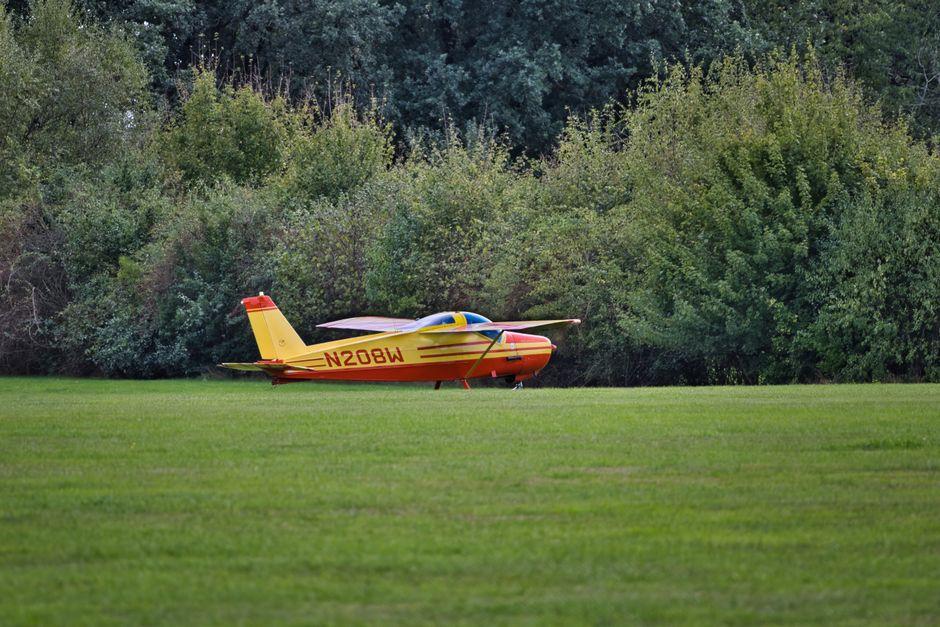
The term "soft field" encompasses any surface that introduces rolling resistance beyond what a hard, paved runway provides. Grass strips, turf, gravel, compacted dirt, sand, and even wet or snow-dusted pavement can all qualify depending on conditions. The core challenge in all of these environments is the same: the surface has the potential to slow the aircraft more aggressively during the takeoff roll, trap the nosewheel, or destabilize the aircraft during rollout after landing.
Beyond the practical need to operate safely from non-paved surfaces, soft-field training delivers deeper benefits to every student's overall flying skill set. Learning to hold the nosewheel light during the ground roll sharpens elevator control awareness. Transitioning to flight in ground effect and accelerating to climb speed teaches precise airspeed discipline at altitudes where errors carry real consequences. And executing a smooth, flat landing flare that gently transfers weight to the main gear first develops the fine motor control that separates polished pilots from merely adequate ones.
If you are training toward your private pilot certificate, soft-field operations will appear on your practical test. More importantly, they will appear in real-world flying situations you cannot always predict in advance. Building genuine proficiency now pays dividends throughout your entire flying career.
The soft-field takeoff begins before the aircraft ever reaches the runway threshold. The objective is to minimize the time and distance spent rolling on a surface that creates extra drag and poses a nosewheel-trapping hazard. Every element of the technique flows from that core goal.
During taxi to the runway, hold the yoke full aft to transfer as much weight as possible to the main gear and keep the nosewheel light over any soft or uneven surface. Do not stop at the hold-short line if it can be avoided — cleared aircraft should taxi directly onto the runway in a continuous, rolling motion, applying power smoothly as the aircraft aligns with the centerline. Any prolonged stop on a soft surface risks sinking or bogging down.
Apply full power smoothly and continuously hold back pressure on the yoke. The goal is to lift the nosewheel off the surface as quickly as possible — earlier than in a normal takeoff — and then hold the aircraft in a nose-high attitude while it accelerates in ground effect just above the runway surface. The aircraft will fly itself off the ground at an airspeed below normal liftoff speed. Allow it to do so without forcing it airborne prematurely.
Once airborne, lower the pitch attitude slightly to keep the aircraft in ground effect — that region within approximately one wingspan's height above the surface where induced drag is significantly reduced. Do not climb out of ground effect until you have accelerated to Vx (best angle of climb speed) if obstacles are present, or to Vy (best rate of climb speed) for an open departure. Climbing too steeply before reaching the appropriate airspeed risks settling back onto the surface or failing to clear obstacles.
If an obstacle exists at the departure end, remain in ground effect and accelerate to Vx before initiating the climb. Once clear of the obstacle, transition to Vy and continue the normal climb-out. If no obstacle is present, accelerate directly to Vy while still in ground effect and then establish the normal climb attitude.
The objective of a soft-field landing is the opposite of the takeoff in one key respect: rather than getting the aircraft off the surface as quickly as possible, the goal is to transfer weight onto the main gear as slowly and gently as possible, keeping the nosewheel light until rollout speed is sufficiently low to prevent it from digging into the surface.
Configure the aircraft normally for landing — appropriate flap setting, stabilized approach airspeed, and a well-established glide path. The approach itself does not differ dramatically from a normal landing approach. The key differences begin at the flare and continue through rollout. Aim for a normal touchdown point and maintain a stabilized approach all the way to the flare.
Begin the flare at the normal height and gradually increase back pressure to slow the descent rate. The goal is a very smooth, gentle touchdown on the main gear only, with the nosewheel remaining in the air. Unlike a normal landing where you allow the nosewheel to settle shortly after main gear contact, in a soft-field landing you actively hold the nosewheel off the surface for as long as practical during the rollout. This reduces the load on the nosewheel and prevents it from digging into soft or uneven ground.
As the aircraft decelerates during rollout, maintain back pressure to keep the nosewheel elevated. Apply braking very gently if at all — on a truly soft surface, aggressive braking can cause the main gear to sink or the aircraft to nose over. Allow the nosewheel to settle progressively as speed decreases and elevator authority diminishes. Exit the runway in a continuous rolling motion whenever possible — stopping on a soft surface poses the same bogging risk as during taxi.
Even students who have mastered normal and short-field operations frequently make predictable errors when introduced to soft-field technique. Understanding these errors in advance gives you a significant advantage going into training.
Like all flight maneuvers that demand precise energy management near the ground, soft-field technique improves most rapidly through deliberate, focused repetition with qualified instruction. The first few attempts will likely feel unfamiliar — particularly the experience of flying in ground effect just above the runway during the takeoff roll, which requires resisting the instinct to either pitch up aggressively or let the aircraft settle back down.
Your flight instructor will typically begin soft-field training on a paved runway so that the technique can be practiced and evaluated without the added variable of an actual soft surface. Once the fundamentals are solid, practice may move to a grass strip or other surface where the real-world demands of the technique become immediately tangible. Many students find that flying from an actual grass field for the first time makes the purpose of every element of the technique suddenly, viscerally clear.
At Savannah Aviation, our instructors structure soft-field training progressively — building technique on pavement before moving to real-world surface variation — so that students arrive at their private pilot checkride with genuine proficiency rather than a superficial familiarity. Call (912) 964-1022 to schedule a lesson and begin developing the aircraft control skills that will define you as a safe, capable, and truly well-rounded pilot.
Request a personalized discovery flight and experience how professional instruction and careful preparation make learning to fly exciting and rewarding. Our team guides every step to help you build skills safely and confidently.
.webp)





.webp)