Navigating a bustling airport surface requires a thorough understanding of standard runway markings and their specific meanings. These essential visual cues painted on the tarmac guide pilots safely during critical phases of takeoff and landing. Mastering this complex visual language prevents dangerous ground collisions and unauthorized incursions.
Master airport navigation by dialing (912) 964-1022 to schedule a guided surface operations training flight with our expert instructors.
Pilots must instantly recognize the difference between taxiway boundaries and active runway hold short lines. Every stripe and painted number provides critical situational awareness when operating heavy machinery near other aircraft. Memorizing these essential surface patterns remains a fundamental requirement for earning your private pilot certificate.
Aviation safety relies heavily on a standardized system of painted surface designs. These visual aids communicate vital instructions to aircrews without requiring constant radio transmissions. Maintaining visual consistency across different global regions allows international aviators to interpret vital ground instructions effortlessly and accurately.
Without these clear indicators, maneuvering around a busy airfield would become chaotic and dangerous. Painted stripes dictate where aircraft can safely taxi, wait, or accelerate for departure. They act as the ultimate traffic control system for highly congested commercial and private airports.
Smaller regional airports generally feature basic visual runway markings designed for aircraft operating under clear weather conditions. These simpler designs typically include basic centerline stripes and numerical designations. Visual runways rely on the pilot being able to see the surrounding terrain clearly during approach.
Conversely, larger commercial facilities utilize complex precision instrument designs to assist crews during low visibility operations. These advanced layouts feature touchdown zone indicators and elaborate aiming points. Precision markings provide critical distance information when pilots descend through thick fog or heavy rain systems.
Every landing strip receives a specific numerical designation based on its magnetic heading relative to magnetic north. A strip facing due south receives the number 18 because it aligns with 180 degrees. This brilliant system helps crews verify their magnetic compass alignment.
When parallel strips exist at the same facility, letters accompany the numbers to prevent severe confusion. The letters L, C, and R stand for left, center, and right respectively. Reading these characters correctly ensures you align your aircraft with the specifically assigned landing path.
A dashed white line running straight down the middle of the pavement serves as the primary directional guide. Keeping the nose wheel perfectly aligned with this stripe guarantees sufficient wing clearance from adjacent obstacles. It provides crucial lateral guidance during rapid acceleration and deceleration.
During nighttime operations or heavy rainstorms, this central stripe becomes an essential lifeline for the flight crew. Staying glued to the center prevents the aircraft from drifting dangerously close to soft dirt shoulders. It establishes the safest possible path for every single flight operation.
The beginning of the usable landing surface is clearly identified by a series of solid white vertical stripes. These bold threshold bars resemble the keys of a piano and signal the start of safe pavement. Counting these stripes actually reveals the total runway width.
A larger number of vertical bars indicates a wider landing surface accommodating large commercial passenger jets. Smaller general aviation airports might feature fewer bars representing a much narrower strip. Recognizing this correlation helps novice aviators anticipate crosswind effects before touching down the wheels.
Two large solid white rectangular blocks painted shortly after the threshold serve as the primary visual aiming point. Instructors teach students to focus their eyes directly on these prominent blocks during the final approach descent. Hitting this exact target ensures a beautifully smooth touchdown.
The aiming point is strategically positioned to provide adequate obstacle clearance over the boundary fence. Staring at this target prevents pilots from flaring the aircraft too high or too late. It provides the perfect geometric angle for a stabilized and incredibly safe landing maneuver.
Beyond the aiming point, pilots will observe a descending series of smaller rectangular bars arranged symmetrically. These touchdown zone markers identify the safest area to place the landing gear upon the pavement. They provide instant visual feedback regarding how much runway length remains available.
For example, analyzing these markers can help you calculate if you have 1700 feet of remaining pavement, dictating whether you must brake aggressively or exit smoothly. Monitoring these descending markers prevents severe runway overrun accidents during wet or icy conditions. It helps crews calculate their braking action effectively.
Sometimes an airport must move the designated landing area further down the pavement due to tall trees nearby. This relocated starting point is called a displaced threshold and is marked by solid white arrows. You cannot touch down before you pass the solid white line.
While you cannot land on the section painted with arrows, you can safely use it for taxiing or beginning a takeoff roll. Understanding this vital distinction allows operators to maximize their available takeoff distance safely. It prevents unnecessary weight restrictions on departing commercial flights.
A relocated threshold completely closes a portion of the pavement to all flight operations due to construction activities. Yellow chevrons painted across the asphalt clearly indicate that the surface is structurally unfit for aircraft. Rolling over these chevrons could severely damage delicate landing gear.
When a facility permanently closes a landing strip, highly visible yellow crosses are painted at both ends of the pavement. These bold crosses signal airborne traffic that the surface is completely out of service. Attempting to use a closed strip violates federal safety regulations.
Exiting the active landing area quickly and safely requires following alternating yellow and green illuminated pathways or painted curves. These lead-off lines guide the aircraft smoothly from the high-speed runway environment onto the slower taxiway network. They ensure efficient traffic flow everywhere.
Following the curved yellow stripe prevents pilots from making excessively sharp turns that could damage their tires. It provides a standardized exit trajectory that keeps the tail section clear of following aircraft. This efficient routing prevents significant delays during busy holiday travel seasons.
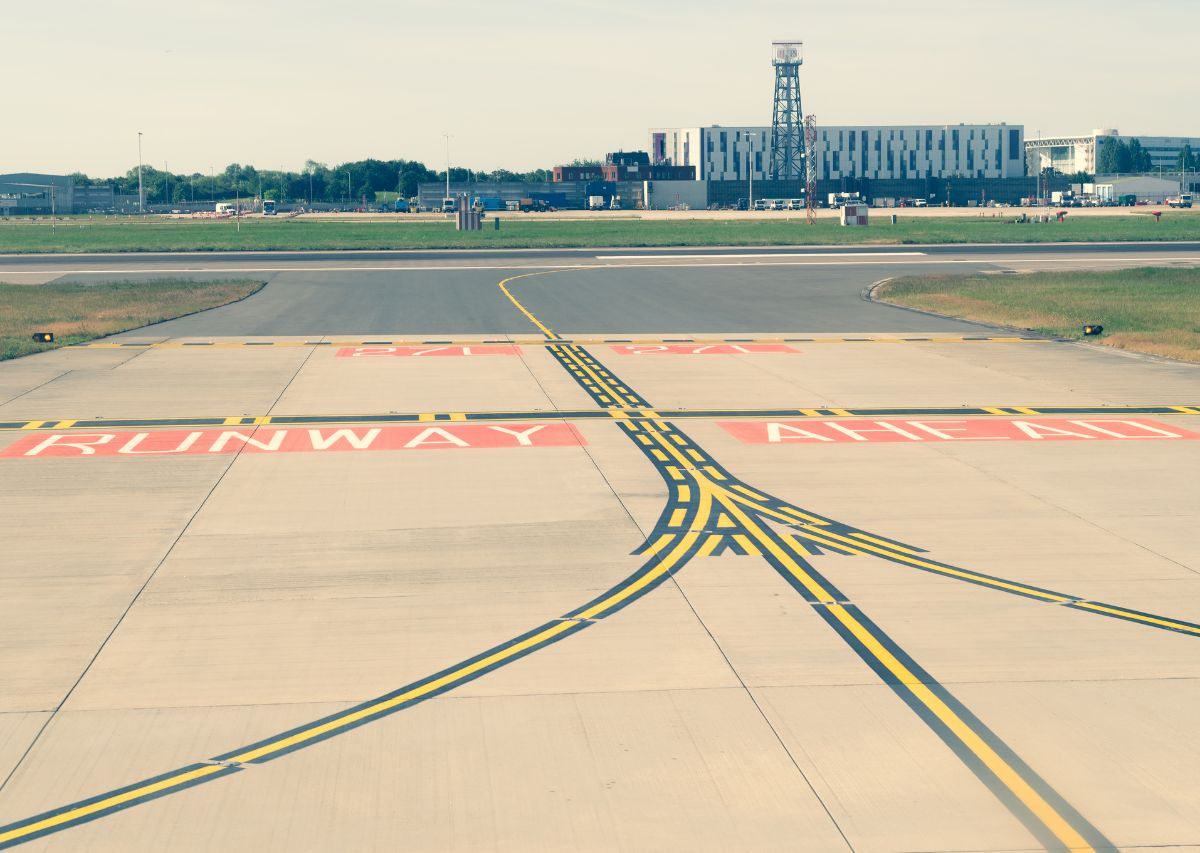
Perhaps the most critical painted surface design is the hold short line located where a taxiway meets an active runway. This boundary features four yellow lines consisting of two solid and two dashed stripes. You must never cross the solid lines without explicit tower permission.
Violating this specific boundary creates a dangerous runway incursion that could lead to a catastrophic collision with another plane. Ground controllers rely on pilots strictly obeying these painted stop signs to maintain absolute order. Safety always demands total compliance with this specific painted boundary.
To further warn crews that they are approaching an active landing area, major airports utilize enhanced taxiway centerlines. These feature dashed yellow borders surrounding the standard solid yellow taxiway line for 150 feet before the boundary. This visual warning heightens crew situational awareness.
This enhancement was introduced specifically to reduce accidental incursions caused by distracted flight crews during complex ground routing. The bold dashes demand immediate attention and prompt pilots to verify their clearance status mentally. It serves as an excellent final warning before entering a dangerous zone.
When physical airport signage becomes obscured by snow or dense fog, surface painted holding position signs provide backup information. These large red rectangular boxes feature white numbering painted directly onto the taxiway asphalt. They confirm exactly which active landing area you are currently waiting beside.
Glancing down at the pavement allows the captain to double-check the assigned clearance limit without searching for physical signs. This redundant information system significantly reduces navigational errors during severe weather operations. It keeps massive commercial airliners exactly where they belong safely.
Large areas of pavement preceding the actual runway threshold are frequently marked with bright yellow chevron patterns. These specific zones are known as blast pads and are engineered solely to prevent soil erosion from powerful jet engines. They cannot support the massive weight of airplanes.
Inexperienced aviators must never attempt to use a blast pad for taxiing, takeoff, or landing under any circumstances whatsoever. The pavement in this section is intentionally fragile and will collapse under heavy structural loads. Respecting the yellow chevrons prevents highly expensive aircraft damage and delays.
Student pilots frequently make predictable errors when learning to navigate complex ground environments during their initial aviation training hours. Memorizing these common pitfalls helps novice aviators develop much safer habits while avoiding unwanted attention from local tower controllers. Being proactive protects your pristine flight record.
Avoiding these common traps requires continuous study and diligent preflight planning before starting the engine. Reviewing the expected taxi route with your flight instructor guarantees a smooth transition from the parking ramp to the departure threshold. Preparation remains the ultimate key to aviation safety.
Savannah Aviation has proudly built a lasting heritage of aviation excellence for many decades. We offer customized private pilot training, instrument ratings, and complex commercial flight instruction. Our elite instructors utilize specialized scenario-based training to ensure safety. Step onto the tarmac today and navigate your bright future.
Contact: info@savannahaviation.com | (912) 964-1022
Request a personalized discovery flight and experience how professional instruction and careful preparation make learning to fly exciting and rewarding. Our team guides every step to help you build skills safely and confidently.
.webp)








.webp)