Understanding density altitude is one of the most practical, real-world skills a student pilot can develop. It is a concept that continues to matter throughout an entire flying career. Unlike a maneuver you practice and refine over a handful of lessons, density altitude is an environmental factor that quietly affects nearly every takeoff, climb, and landing you will ever perform. On a hot, humid afternoon or at a high-elevation airport, an airplane that handles predictably on a cool, sea-level morning can suddenly need far more runway and climb far more sluggishly, even though nothing about the airplane itself has changed.
At Savannah Aviation, our flight instructors weave density altitude discussions into ground briefings and preflight planning throughout the entire training curriculum, not just before a single lesson on performance charts. Learning to recognize when conditions are working against you, and to plan accordingly, is part of what separates a cautious, capable pilot from one who gets caught by surprise. Call (912) 964-1022 to schedule an introductory lesson and start building the performance-planning habits that keep every flight safe.
Many student pilots assume that as long as the airport elevation is low, performance will be roughly the same every day. In reality, temperature and humidity can make a low-elevation airport behave, aerodynamically speaking, like a much higher one. This guide walks you through what density altitude actually is, why it matters so much for safe flight planning, and how to build the habit of checking it before every flight.
Density altitude is pressure altitude corrected for non-standard temperature. In plain terms, it describes how "thin" or "thick" the air feels to your airplane's wings, propeller, and engine, expressed as an equivalent altitude in standard atmospheric conditions. On a hot day, the air molecules are more spread out, so the air is less dense than the standard atmosphere would predict at that same pressure altitude. The result is a density altitude that is higher than the airport's actual field elevation.
This matters because your wing generates lift by moving air molecules across its surface, your propeller generates thrust by accelerating air, and your engine produces power by combusting a fuel-air mixture. When the air is less dense, all three of those processes become less efficient. The airplane still flies the same maneuvers and reacts to the same control inputs, but it needs more distance and more time to do the same amount of work.
Temperature is usually the single biggest factor. As air warms, it expands and becomes less dense, pushing density altitude upward even when the barometric pressure altitude itself has not changed at all. This is why late morning and afternoon flights during summer often feel noticeably different from an early morning departure at the same airport.
Airports at higher elevations start with thinner air to begin with, so they are more sensitive to temperature swings. A mountain or plateau airport can reach dangerously high density altitude values on an otherwise unremarkable summer day.
Water vapor is less dense than the dry air it displaces, so humid conditions push density altitude higher as well, though generally by a smaller margin than temperature. Because humidity's effect is harder to estimate mentally, many pilots rely on an electronic flight computer or a density altitude chart rather than trying to account for it by feel.
None of these effects happen because something is wrong with the airplane. They happen because the surrounding air itself is behaving differently than it would under standard conditions, and the airplane's performance numbers in the pilot's operating handbook are built around those standard assumptions.
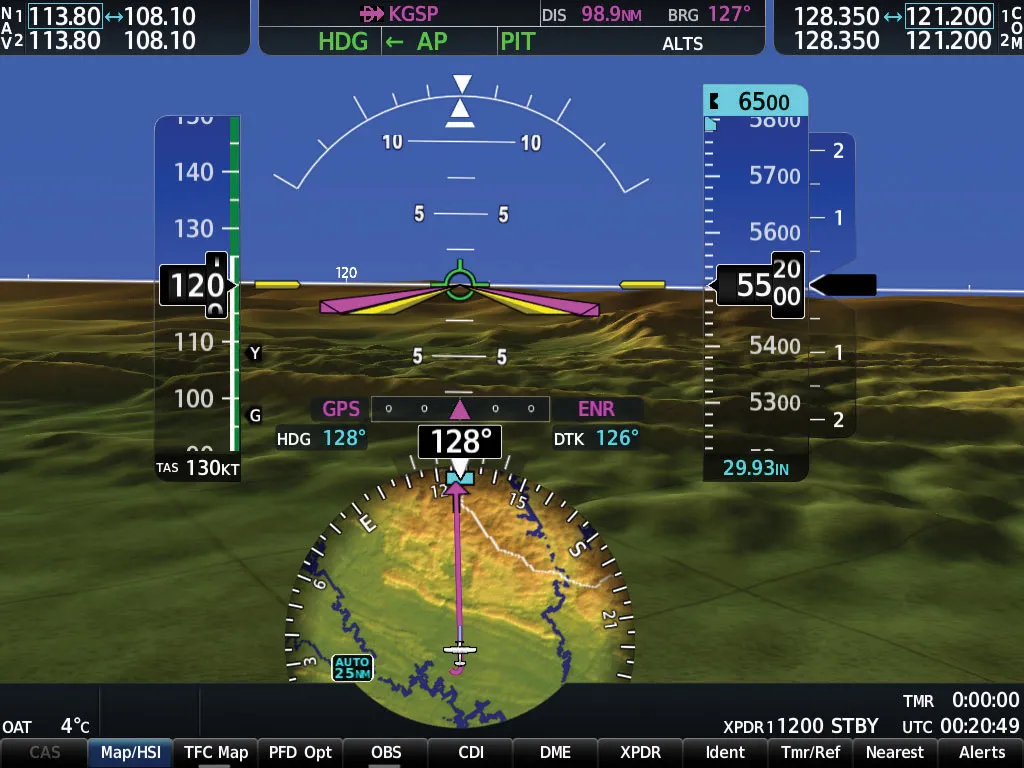
The good news is that density altitude is entirely predictable and plannable. Before any flight, especially on a hot or humid day, or at a high-elevation airport, pull the current temperature, altimeter setting, and field elevation and work through the density altitude calculation using a flight computer, an electronic E6B app, or the performance charts in your aircraft's handbook. Compare the resulting takeoff and climb performance figures against the runway length and any obstacles you will need to clear.
If the numbers are tight, consider practical adjustments: fly earlier in the morning when temperatures are cooler, reduce the aircraft's weight by carrying less fuel or fewer passengers, or choose a longer runway if one is available nearby. These are the same judgment calls that experienced pilots make routinely, and building the habit early, during your primary flight training, will serve you well long after you earn your certificate.
Instructors will often walk new students through a real density altitude calculation using that day's actual weather, rather than only working practice problems in a classroom. Feeling the difference in acceleration and climb rate firsthand, on a genuinely hot afternoon versus a cool morning, tends to make the concept stick in a way that a chart alone cannot.
Density altitude questions appear on the private pilot written exam and often come up during the oral portion of the checkride, but its real importance is operational, not academic. Pilots who go on to fly commercially, who operate out of mountain airstrips, or who simply fly recreationally on hot summer weekends will rely on this same calculation for the rest of their flying lives. Building a habit of checking it before every flight, not just when conditions look obviously extreme, is one of the simplest ways to stay ahead of a performance problem before it ever develops.
If you are ready to start developing this kind of practical, real-world aeronautical judgment, our instructors would be glad to walk you through it in the airplane, not just on paper.
Request a personalized discovery flight and experience how professional instruction and careful preparation make learning to fly exciting and rewarding. Our team guides every step to help you build skills safely and confidently.
.webp)







.webp)