What happens during a discovery flight comes down to four stages: a short ground briefing, a hands-on preflight walk-around, time actually at the controls once you are clear of the airport, and a debrief where your instructor talks about next steps. Most people walk in expecting to sit quietly in the back while someone else flies. That is not how it works here, and knowing the real sequence ahead of time takes a lot of the guesswork out of your first visit to the flight school.
A discovery flight exists for one main reason: to let you find out whether you actually like flying an airplane before you spend real money on a training program. It is not a sightseeing ride and it is not a test. Below is what the hour or so on the schedule actually looks like, from the moment you walk in the door to the moment you shake your instructor's hand afterward.
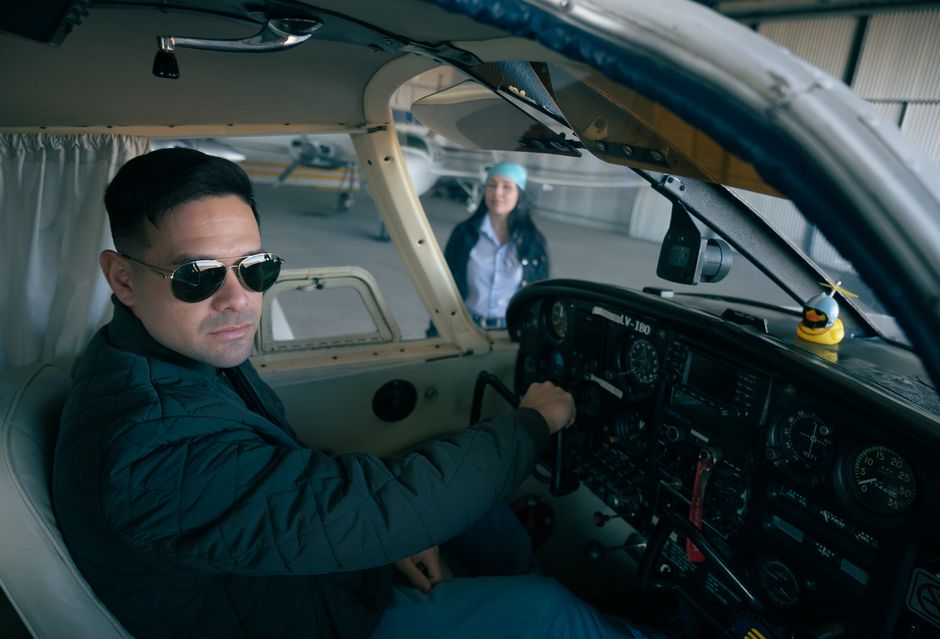
Before any engine starts, you will spend 15 to 20 minutes at a table with your instructor going over the basics: how the controls work, what the flight will cover, and what you can expect to feel in the air. This part matters more than most first-timers assume, because it removes the mystery from everything that follows.
Your instructor will typically sketch out the four main flight controls (the yoke or stick, the rudder pedals, the throttle, and the trim) and explain, in plain terms, what each one changes about how the airplane moves. You do not need to memorize anything. The goal is just to give you a mental map so that once you are airborne, the actions make sense instead of feeling random. This is also when you will fill out a simple form with basic information and get a quick rundown of the flight school's aircraft.
No preparation is expected or necessary. Discovery flights are built for people who have never touched an airplane control before, and instructors are used to explaining everything from zero. If you have questions about the aircraft itself, our flight school fleet page gives a general sense of what you might fly, but there is no homework to complete beforehand.
Comfortable, closed-toe shoes and clothing you would wear to walk around outside on a normal day is all you need. There is no special gear or uniform, and you will not need to bring anything except maybe sunglasses and a phone if you want photos once you are in the air.
Cabins in small training aircraft can run warmer than you might picture, especially before the engine and airflow get going, so dressing in light layers works well most of the year. If your discovery flight happens to fall on a cooler morning, a jacket you can take off once you are in the seat is a reasonable idea. There is genuinely no way to dress "wrong" for this.
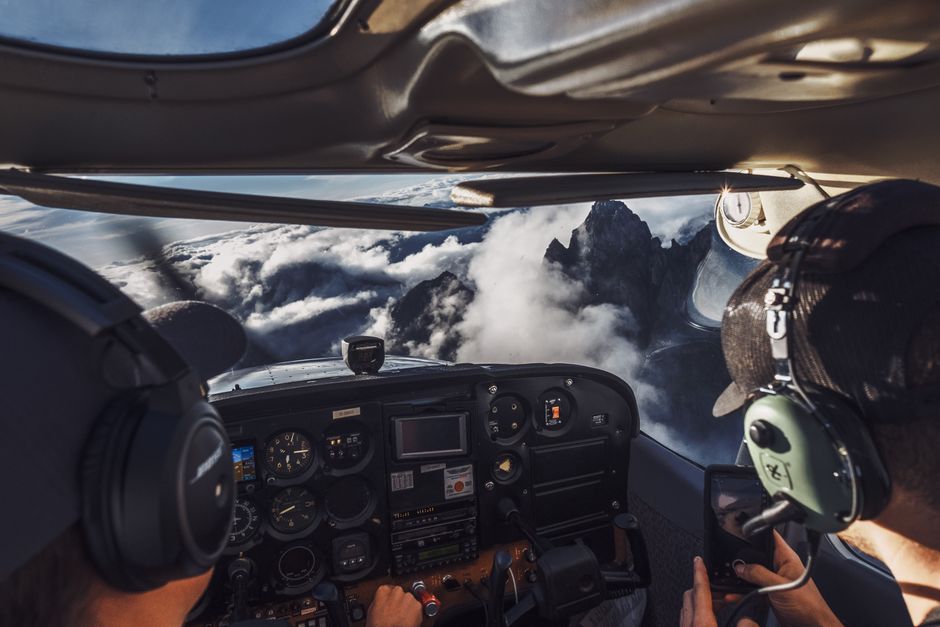
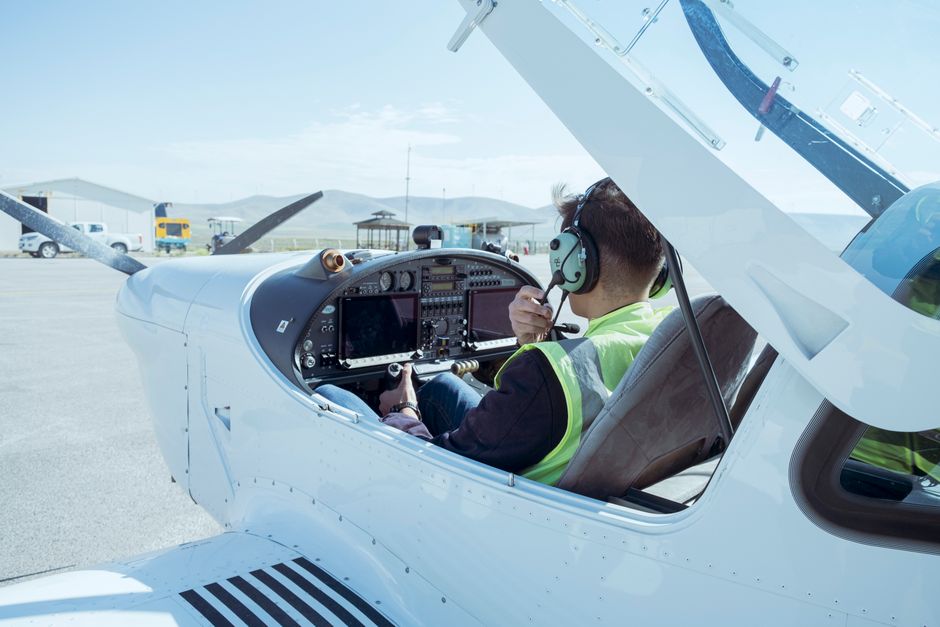
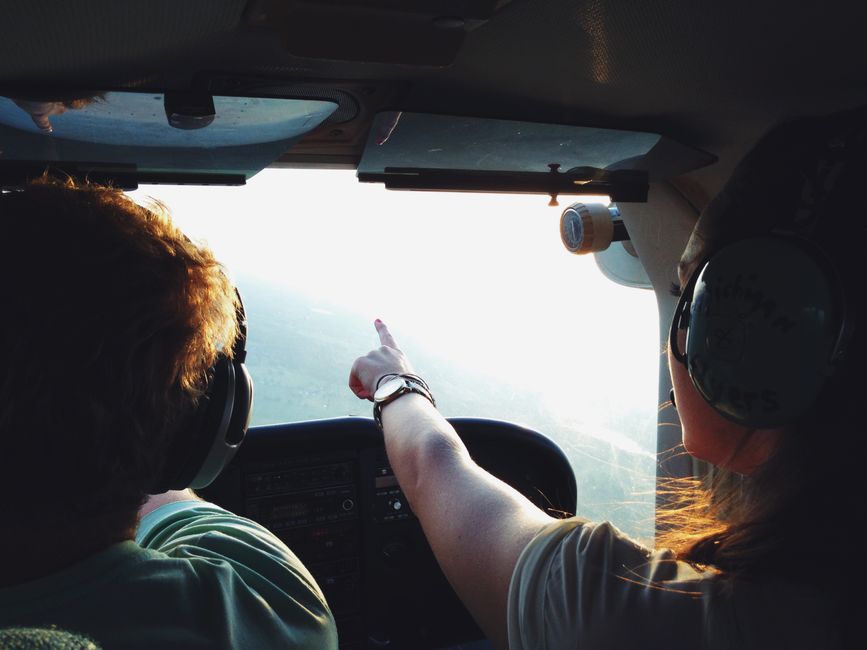
Yes, this is the part most people are surprised by. Once your instructor has the airplane established at a safe, stable altitude away from the airport traffic pattern, they will hand the controls over to you and talk you through a few gentle turns, a climb, and a descent. You are doing the flying, with your instructor's hands close by the whole time.
This is not a token gesture. The instructor genuinely lets you feel how the airplane responds to your inputs, because that direct feedback is the entire point of the flight. Most people describe it as more intuitive than they expected: a small, smooth movement of the controls is usually all it takes to see the nose rise or the wings bank. Your instructor stays on the controls enough to keep things safe, but the airplane is responding to what you do.
Takeoff and landing are handled by your instructor. Those are the two busiest, most precise phases of any flight, and no one expects a first-timer to manage them. You get the cruise portion, which is exactly where the "feel" of flying actually lives.
Mild nerves before your first flight are completely normal, and instructors watch for this and adjust the flight accordingly. If you feel uneasy once airborne, you can say so at any point, and your instructor will level off, slow the pace, or head back sooner. There is no pressure to push through discomfort to "get your money's worth."
A short, calm flight where you felt in control of the experience is more useful to you than a longer one where you spent the whole time gripping the seat. Instructors would generally rather cut a flight a few minutes short than have you leave with a bad impression of something you might otherwise enjoy.
After you are back on the ground, your instructor will spend a few minutes talking through what you just experienced and answering whatever questions came up mid-flight, since most people think of several once their heart rate settles. This debrief is also where they will describe how those same maneuvers connect to the early lessons of actual flight training.
Nobody pressures you to sign up for anything on the spot. The honest purpose of this conversation is to help you decide, with real information instead of guesswork, whether flight training is something you want to pursue. If you are leaning toward yes, this is a natural moment to ask about scheduling, and our team can walk you through how booking a discovery flight leads into a full training plan if you decide to continue.
A discovery flight is shorter, less structured, and has no pass or fail standard attached to it. A normal training lesson, by contrast, works toward specific FAA-defined skills you will eventually be tested on, and it builds directly on the lesson before it.
Think of the discovery flight as a preview, not a first chapter. It borrows a little bit from what an early lesson feels like (sitting up front, handling the controls, hearing the instructor talk you through what is happening) without the pressure of building toward a checkride. Once you commit to training, the pace and structure change: you will start keeping a logbook of every flight, working from a syllabus, and tracking specific milestones like your first solo. If you want a sense of what that longer path looks like once you are past this first flight, our guide on building a training schedule that sticks covers how often students typically fly once lessons begin in earnest.
If you are unsure whether you would actually enjoy flying, rather than just liking the idea of it, a discovery flight is a low-risk way to find out. It generally costs less than a full lesson package and gives you direct, physical feedback that no amount of reading or video-watching can replace.
Some people leave completely certain they want to start training right away. Others enjoy the flight but decide the timing is not right yet, and that is a perfectly reasonable outcome too. Either way, you leave with a clearer picture than you had walking in, which is really the entire point of scheduling one.
If you are ready to see what it feels like firsthand, you can get in touch to schedule your discovery flight and pick a time that works with your schedule.
Request a personalized discovery flight and experience how professional instruction and careful preparation make learning to fly exciting and rewarding. Our team guides every step to help you build skills safely and confidently.
.webp)





.webp)