Learning how to fly in turbulence is one of the most important practical skills a student pilot will develop during flight training. Turbulence is a normal, unavoidable part of aviation — yet for many new pilots, that first significant bump in the sky can feel alarming. The key is understanding what turbulence actually is, why it happens, and exactly what you should do when your aircraft starts moving in unexpected directions.
At Savannah Aviation, our experienced flight instructors expose students to real-world conditions from early in the training program, so that turbulence becomes a manageable challenge rather than a source of fear. Call (912) 964-1022 to schedule your introductory lesson and start building the skills that make you a safe, confident pilot in any conditions.
Understanding turbulence is not just about comfort in the cockpit — it is a genuine safety matter. Pilots who recognize the types of turbulence, anticipate the conditions that generate it, and apply the correct aircraft handling techniques are better equipped to protect themselves and their passengers throughout every phase of flight.
Turbulence is the irregular, sometimes violent movement of air that disrupts smooth airflow around and beneath an aircraft. It can be caused by a variety of atmospheric and mechanical factors, and no single source is exclusively responsible. As a student pilot, you will learn to recognize the most common causes and anticipate where turbulence is likely to be encountered.
Thermal turbulence — also called convective turbulence — is among the most frequently encountered types during daytime flying at lower altitudes. The sun heats the Earth's surface unevenly: pavement, open fields, and bodies of water absorb and release heat at different rates. These temperature differences create rising columns of warm air called thermals and sinking columns of cooler air called downdrafts. Flying through the boundary between a thermal and its neighboring air mass produces the bumpy, irregular movement that student pilots most commonly experience during their first solo flights.
Thermal turbulence is typically most intense during mid-afternoon on hot, sunny days and is usually much smoother in the early morning or evening hours. Recognizing this pattern will help you make smarter go/no-go decisions as you develop your pilot judgment.
Mechanical turbulence is generated when moving air strikes a physical obstacle — a ridge line, a row of buildings, or a line of trees near a runway. The obstruction disrupts the airflow and creates eddies and swirling currents on the downwind side of the object. Student pilots flying into airports surrounded by terrain or structures may encounter mechanical turbulence during the approach and landing phase, which is why understanding local airport environments is an essential part of preflight planning.
Wind shear occurs when wind speed or direction changes rapidly over a short distance. It can be horizontal — associated with the boundary between a warm and cold air mass — or vertical, associated with temperature inversions and jet streams. Frontal turbulence is especially relevant to VFR student pilots because it is closely tied to weather systems that may also reduce visibility and ceiling heights. Learning to read METARs and TAFs helps you identify the risk before ever leaving the ground.
The FAA defines four standard turbulence intensity categories that appear in PIREPs (Pilot Reports), AIRMETs, and SIGMETs. Understanding these categories helps you interpret weather products and assess whether a flight is appropriate for your experience level and aircraft.
For student pilots operating light training aircraft under Visual Flight Rules, the primary concern is recognizing light to moderate turbulence and responding appropriately. Your flight instructor will walk you through the specific turbulence penetration procedures applicable to your training aircraft — whether that is a Cessna 172 or another trainer in the fleet.
Knowing what to do when turbulence hits is where preparation translates into performance. The following techniques are the foundation of safe turbulence management that your instructors at Savannah Aviation's flight school will reinforce through both ground instruction and in-cockpit practice.
The single most important thing a pilot can do when encountering significant turbulence is to reduce airspeed to or below the aircraft's maneuvering speed, designated as Va. Maneuvering speed is the maximum speed at which full or abrupt control inputs will not overstress the airframe. At speeds above Va, a single full deflection of a control surface in turbulent air could theoretically exceed the aircraft's structural load limits.
Every aircraft has a published Va that varies with gross weight — heavier aircraft have a higher Va, while lighter aircraft have a lower one. Before every flight, confirm your aircraft's current maneuvering speed for its loaded weight by referencing the Pilot's Operating Handbook (POH). Your instructor will drill this into your preflight checklist habits early.
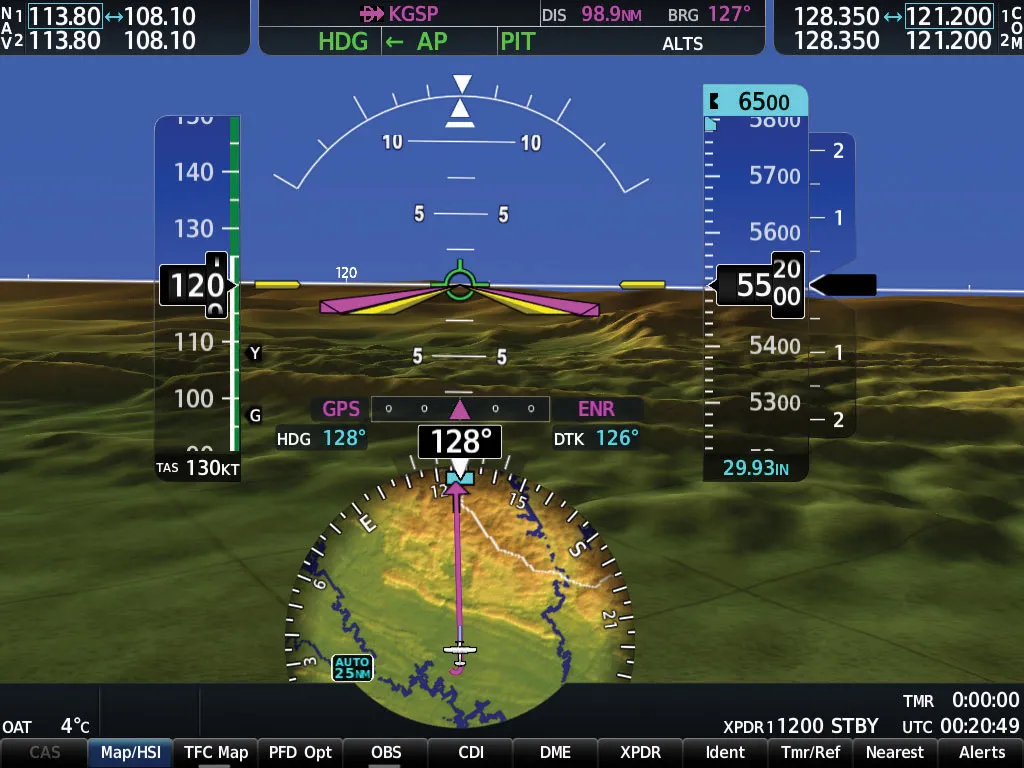
A common mistake among new pilots in turbulence is chasing altitude — frantically correcting every deviation the bumps produce, over-controlling the aircraft, and ultimately making the ride worse. The correct technique is to select a target pitch attitude on the attitude indicator and hold it with gentle, deliberate inputs. Allow the aircraft to move with the turbulence rather than fighting every gust. The altitude will deviate temporarily, but the aircraft will be far more stable and structurally safe with smooth, coordinated control inputs than with aggressive, reactive corrections.
Before entering a known turbulent area, trim the aircraft for straight and level flight at or below maneuvering speed. Proper trim reduces the effort required to maintain attitude and minimizes the chance of large unintended control inputs in response to sudden bumps. A well-trimmed aircraft is a more stable platform in disturbed air.
If you are flying with passengers, brief them before departure about the possibility of turbulence. Ensure all seat belts are fastened, loose items are stowed, and tray tables (if applicable) are put away. A calm, confident preflight briefing from the pilot in command goes a long way toward reducing passenger anxiety — and it is part of the professional pilot behavior that Savannah Aviation instructors model from day one.
Avoidance is always preferable to penetration. Learning to use the full suite of preflight weather tools is a core part of your flight training curriculum and will help you build the judgment to route around turbulent conditions whenever possible.
Your flight instructor will teach you how to access, interpret, and apply each of these tools during your ground instruction sessions, building habits that will serve you from your first solo all the way through your commercial pilot career.
Like most aspects of flying, comfort in turbulence comes with supervised exposure and repetition. Early in training, bumps in the air can feel disorienting because you are still learning the feel of the controls and the sounds of the aircraft. As your hours accumulate and your instrument scan matures, turbulence transitions from an alarming unknown to a manageable, routine condition.
At Savannah Aviation, our instructors deliberately incorporate flights during varying atmospheric conditions to ensure students are not just fair-weather pilots. A student who has only ever flown in calm, smooth air is underprepared for the real world. The goal of your flight training is to build a complete, adaptable skill set — and flying in turbulence is a non-negotiable part of that picture.
If you are ready to begin flight training or want to work specifically on building your confidence in challenging conditions, call (912) 964-1022 or reach out through our website to schedule a lesson with one of our certified flight instructors today.
Request a personalized discovery flight and experience how professional instruction and careful preparation make learning to fly exciting and rewarding. Our team guides every step to help you build skills safely and confidently.
.webp)






.webp)