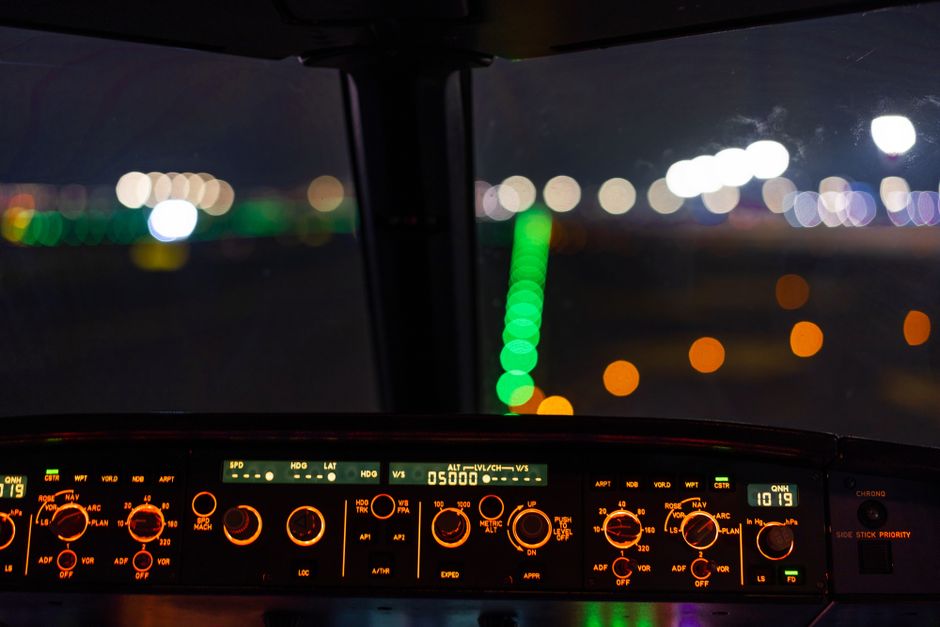
Night flying for student pilots is one of the most exhilarating milestones in the journey toward earning a private pilot certificate. The world looks entirely different from the cockpit once the sun goes down — city grids glow like circuit boards, runways light up like ribbons, and the stars above provide a humbling sense of perspective. But flying at night introduces a distinct set of challenges that demand careful preparation, solid understanding of the rules, and respect for human physiological limitations.
At Savannah Aviation, our experienced flight instructors guide every student through the night flying requirements with the same structured, safety-first approach we bring to every phase of training. Call (912) 964-1022 to schedule your introductory lesson and begin building toward your private pilot certificate today.
Before you can log night flight time that counts toward your private pilot certificate, you must understand precisely what the FAA defines as "night." According to FAA regulations, night is defined as the period beginning one hour after sunset and ending one hour before sunrise. This definition matters because it governs pilot currency, passenger-carrying privileges, and the use of position lights.
Under 14 CFR Part 61.109, the aeronautical experience requirements for a private pilot certificate include a minimum of three hours of flight training at night. Within those three hours, the regulations specify:
These requirements exist for good reason. Takeoffs and landings are the highest-risk phases of any flight, and performing them in darkness requires a pilot to rely heavily on instrument lighting, runway lighting systems, and a trained visual scan — skills that take deliberate practice to develop safely.
It is important to distinguish between earning the night flying endorsement as part of your private pilot training and maintaining night currency afterward. To carry passengers at night as a certificated pilot, you must have performed at least three takeoffs and three full-stop landings during the night period within the preceding 90 days. Failing to maintain this currency does not remove your certificate, but it does legally prohibit you from carrying passengers after dark until you have completed the required landings.
One of the most critical and frequently underestimated aspects of night flying involves the limitations of human eyesight in low-light environments. Understanding how your eyes work — and how they can deceive you — is fundamental to operating safely after dark.
The human eye contains two types of photoreceptor cells: cones and rods. Cones are concentrated in the center of the retina (the fovea) and excel at detecting color and fine detail in bright light. Rods are distributed around the periphery of the retina and are far more sensitive to dim light — but they are not effective at detecting color or fine detail, and they are absent from the very center of your visual field.
This anatomical reality produces one of the counterintuitive techniques every student pilot must internalize: off-center viewing, sometimes called "averted vision." Because the center of your retina lacks rods, staring directly at a dimly lit object — another aircraft, a dimly lit runway threshold, or an obstacle — causes it to disappear or become indistinct. Shifting your gaze slightly to the side of the object allows your rod-rich peripheral retina to detect it more reliably. Practice this technique during ground-based exercises before you ever step into the cockpit for a night lesson.
Your eyes require approximately 30 minutes to fully adapt to darkness — a process called dark adaptation, driven by the regeneration of rhodopsin, the light-sensitive pigment in your rods. Exposure to bright white light — even for a few seconds — can destroy dark adaptation and require another 30-minute recovery period. In the cockpit, this means:
Flying at night means navigating using light instead of landmarks. Every certificated airport with night operations uses a standardized set of lighting systems, and being able to instantly identify them is not optional — it is a safety imperative.
The airport rotating beacon is your first visual cue when locating an airport at night. Beacon flash patterns convey the type of airport at a glance:
Once you have located the airport, the approach and runway lighting systems guide your descent and alignment. Key systems to know include:
Many airports also feature ARCAL (Aircraft Radio Control of Aerodrome Lighting), which allows pilots to activate or increase runway lighting intensity by clicking the PTT button on the CTAF frequency a specified number of times. Your chart supplement will specify the frequency and click pattern for each airport that offers this system.
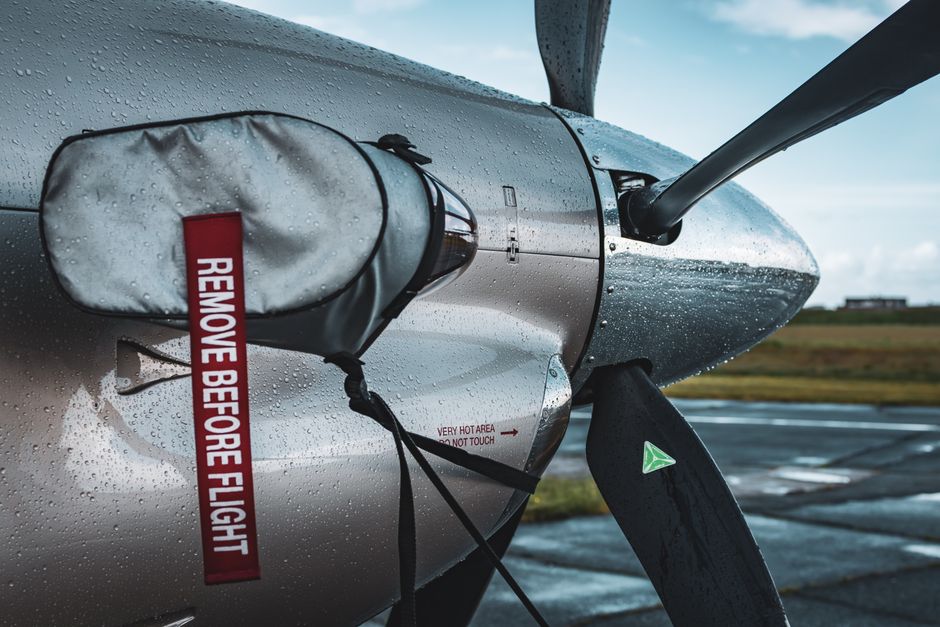
A thorough preflight takes on added importance when you are planning a night operation. Many items that are easy to catch visually in daylight become far more difficult to assess after dark. Building a disciplined, methodical preflight habit is something our instructors emphasize at flight school from the very first lesson — and that discipline pays its greatest dividends at night.
Before any night flight, ensure you have:
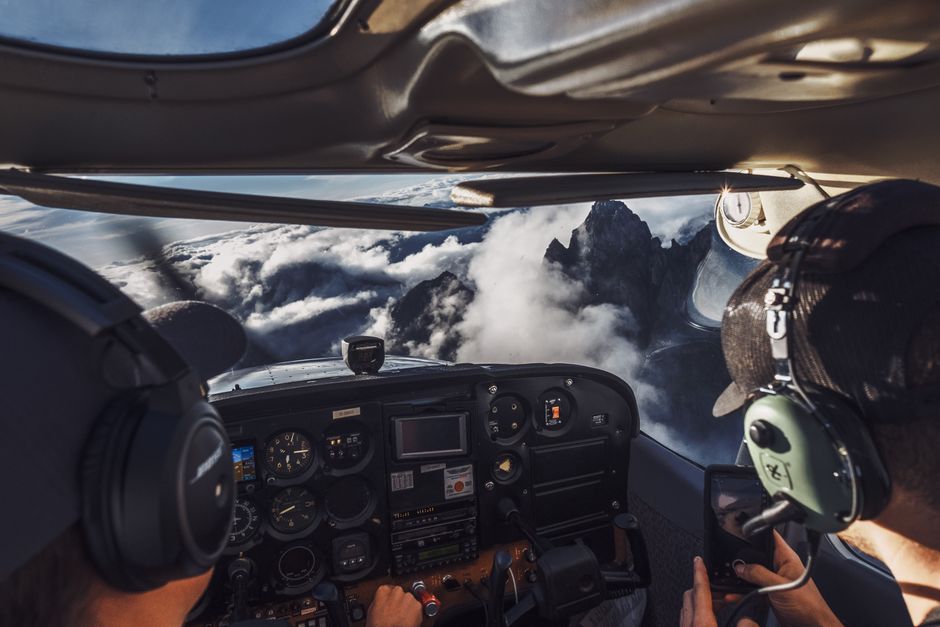
Weather and terrain that are easily visible in daylight can become invisible hazards at night. Mountainous or hilly terrain that you would naturally avoid during the day may not be apparent at all against a dark sky. Clouds at night can be nearly impossible to detect until you are already inside them. Filing a thorough weather briefing, selecting routes over well-lit populated areas when possible, and maintaining a conservative altitude margin above the minimum enroute altitude are all practices that experienced night pilots use to manage these risks.
Night flying is not simply daytime flying with the lights off. It requires a new mental framework, a heightened reliance on instruments, and a refined scan pattern that accounts for the visual limitations discussed above. The good news is that with structured, dual instruction from a qualified flight instructor, most students find that night flying becomes deeply rewarding — and many describe their first solo night flight as the most memorable moment of their training.
At Savannah Aviation, we structure night training progressively. Students first experience nighttime operations with a CFI from the right seat, building familiarity with airport lighting, navigation, and approach procedures before advancing to more complex cross-country scenarios. Every step is designed to build genuine competence, not just logged hours.
If you are ready to take your training to the next level — including the rewarding challenge of night flight — call us at (912) 964-1022 or visit our website to learn more about our complete flight training programs and schedule your next lesson.
Request a personalized discovery flight and experience how professional instruction and careful preparation make learning to fly exciting and rewarding. Our team guides every step to help you build skills safely and confidently.
.webp)






.webp)