Knowing how to respond to an engine failure after takeoff is one of the most critical emergency procedures a student pilot must master before earning a private pilot certificate. The seconds immediately following an engine failure at low altitude are among the most demanding in all of aviation — your options are limited, your altitude is precious, and the margin for error is razor thin. This is not a scenario you can improvise. It is one you must rehearse, understand deeply, and be mentally prepared to execute before every takeoff.
At Savannah Aviation, our experienced flight instructors drill emergency procedures from the earliest stages of training, because a pilot who has never thought through an engine failure scenario is a pilot who is not yet ready to fly solo. Call (912) 964-1022 to schedule your introductory lesson and start building the situational awareness and emergency skills that define safe, professional pilots.
Many student pilots assume engine failures are extraordinarily rare and therefore devote only passing attention to the procedure. While modern aircraft engines are remarkably reliable, failures do occur — and the pilots who survive them almost universally credit disciplined preparation and a clear mental framework rehearsed long before the emergency ever happened. This guide walks you through exactly what to expect, how to respond, and how to build the mental habits that will keep you safe throughout your flying career.
An engine failure at cruise altitude, while certainly serious, gives a pilot considerable time and options. The aircraft can be configured for best glide, a suitable landing area can be identified, and ATC can be contacted. An engine failure during or immediately after takeoff is an entirely different situation.
At low altitude, the aircraft has almost no energy reserve. You may be only a few hundred feet above the ground, still accelerating, in a climb attitude, and close to terrain or obstructions. The instinctive reaction — pulling back on the yoke to stretch the glide or turn back toward the runway — is often exactly the wrong response, and has caused fatal accidents in general aviation. Understanding why that instinct is dangerous is the first step toward managing the emergency correctly.
The fundamental challenge is this: altitude equals options. The closer to the ground you are when the engine quits, the fewer choices you have about where to land. This is why the response to an engine failure after takeoff must be immediate, practiced, and free of hesitation.
The most deadly mistake a pilot can make after an engine failure on departure is attempting to turn back to the runway without sufficient altitude. This maneuver is so frequently fatal in general aviation that it has earned its own name: the impossible turn.
Here is why it is so dangerous. To reverse course and align with the reciprocal runway heading, a pilot must complete well over 180 degrees of banked turning flight. During that turn, the aircraft is losing altitude continuously. If the bank angle is steepened to tighten the turn, the stall speed rises and the risk of an accelerated stall or spin dramatically increases — at an altitude from which recovery is impossible.
Research and accident analysis suggest that the minimum altitude needed to safely complete a turn back to the runway is typically between 1,000 and 1,500 feet AGL, depending on aircraft performance, wind conditions, and pilot proficiency. Below that altitude, the safer option is almost always to land straight ahead or within a narrow cone in front of the aircraft — even in an open field, parking lot, or on a road — rather than attempt a return.
Some flight schools and instructors train pilots to practice the turn-back maneuver at altitude so they understand their specific aircraft's performance numbers. If you are trained at Savannah Aviation's flight school, your instructor will help you determine what altitude and technique apply to your training aircraft in your specific operating environment.
The FAA and experienced aviators alike reinforce one foundational priority framework for any emergency: Aviate first, Navigate second, Communicate third. Engine failure after takeoff is the clearest test of this hierarchy.
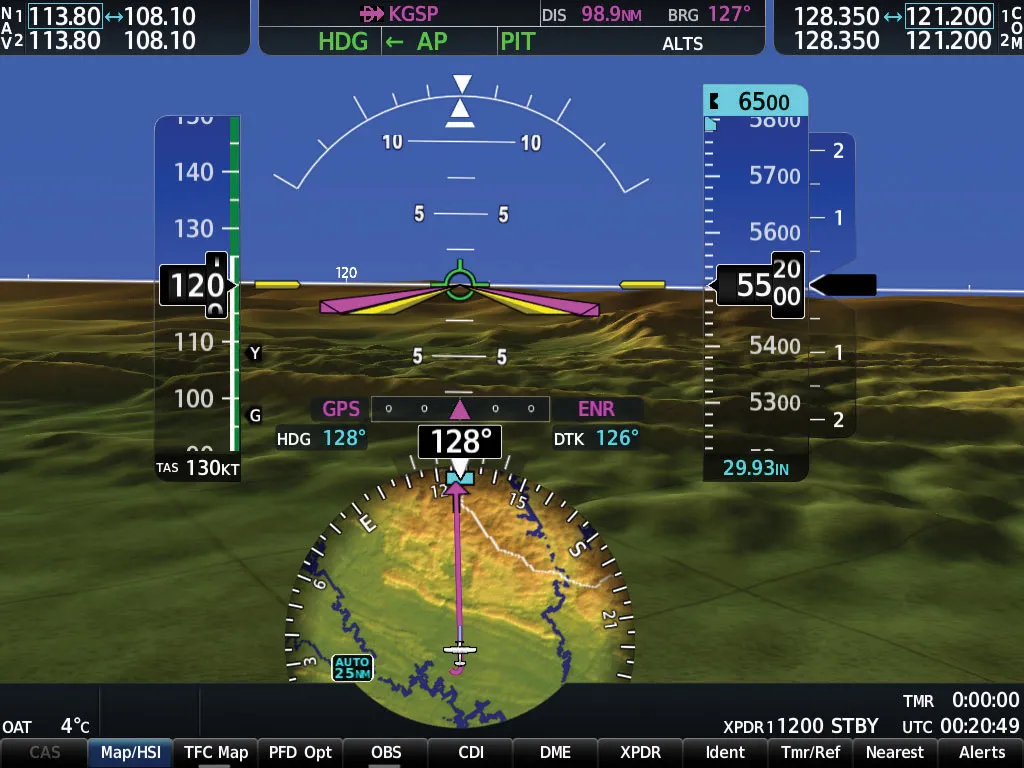
The very first action when the engine quits is to lower the nose and establish best glide speed for your aircraft. This is the airspeed at which the aircraft travels the greatest horizontal distance for every foot of altitude lost. Holding best glide keeps you airborne longer and gives you more distance to reach a landing area. In most single-engine trainers, best glide speed is published in the Pilot's Operating Handbook and should be memorized before every flight.
Do not let the nose come up. The instinct to pull back feels natural when the ground is approaching, but raising the nose above best glide attitude costs you distance and risks a stall. Keep the wings level or use only shallow bank angles.
As soon as you have established best glide, your eyes must scan ahead for a usable landing area. Think fields, roads, open lots — anything relatively flat and clear of major obstructions. Commit to a choice early. Indecision and last-second changes of plan are far more dangerous than a slightly imperfect landing area selected with confidence and time to prepare.
If time and altitude permit, squawk 7700 on the transponder and transmit a Mayday call on the frequency you are monitoring. Give your position, the nature of the emergency, and your intentions. ATC can help coordinate rescue services and clear airspace around you. However, communicating should never distract from flying the aircraft — if you must choose, fly first.
While aviate-navigate-communicate is the priority framework, a real engine failure also demands a rapid scan of potential causes and quick-action items from your emergency checklist. These are aircraft-specific, but common items across most single-engine trainers include:
These checks must be completed rapidly and without letting them distract from aircraft control. In training, your instructor will help you build the habit of running these items smoothly while maintaining a stabilized glide toward your selected landing area.
The most effective preparation for an engine failure after takeoff costs nothing and takes less than thirty seconds. Before every takeoff roll, brief yourself mentally — or aloud — on exactly what you will do if the engine quits at various points during the departure.
A simple self-briefing might sound like this: "If the engine quits before rotation, I abort on the runway. If it quits immediately after liftoff below 500 feet, I land straight ahead in the field to the left. If it quits between 500 and 1,000 feet, I may have enough altitude for a modified turn to the crosswind — I will evaluate. Above 1,000 feet, I will consider the turn back to the runway."
This pre-takeoff mental rehearsal is standard practice among professional and airline pilots, and it is a habit worth building from your very first student solo. When a threat is anticipated, the brain responds faster and with more discipline than when it is surprised.
At Savannah Aviation, we teach this kind of aeronautical decision-making as a core part of pilot training at every level — from student pilots preparing for their first solo to commercial certificate candidates building advanced aeronautical proficiency.
Your flight instructor will introduce simulated engine failures in a controlled, safe environment well before you fly solo. These exercises typically involve the instructor retarding the throttle to idle at various points during climb — immediately after liftoff, at pattern altitude, and during cruise — and asking you to respond correctly.
Do not be discouraged if your first few simulated engine failures feel disorganized. Almost every student pilot initially struggles to suppress the instinct to pull back on the yoke, finds their checklist items jumbled, or forgets to call out a Mayday. These reactions are exactly why practice is indispensable. With repetition, your responses will become smooth, prioritized, and fast enough to matter in the real world.
The goal is not perfection under stress — it is a trained response that buys you every possible second and foot of altitude while keeping the aircraft under control.
Request a personalized discovery flight and experience how professional instruction and careful preparation make learning to fly exciting and rewarding. Our team guides every step to help you build skills safely and confidently.
.webp)





.webp)