Building true proficiency in instrument flying is one of the most transformative steps a pilot can take after earning a private pilot certificate. Flying solely by reference to instruments — without any visual cues from the outside world — demands a fundamentally different skill set from VFR flying, and it challenges even naturally talented stick-and-rudder pilots in ways they rarely anticipate. For pilots who are serious about flying safely in real-world conditions and building toward a professional aviation career, instrument training is not optional — it is essential.
At Savannah Aviation, our experienced flight instructors guide students through every phase of instrument training with focused, methodical instruction. Whether you are a private pilot ready to pursue your instrument rating or a student pilot who wants to understand what lies ahead, call (912) 964-1022 to schedule a lesson and start building the skills that define truly capable, well-rounded aviators.
Many pilots underestimate how deeply instrument flying reshapes their cockpit habits and mental discipline. Flying VFR, you can glance at the horizon and instantly re-establish your attitude. Under the hood or in actual instrument meteorological conditions (IMC), that instinctive reference vanishes. Your vestibular system — the inner ear — becomes actively misleading, creating powerful illusions that feel completely real but are completely wrong. This guide walks you through what instrument flying actually involves, how the instrument scan works, the most common errors students make, and how to build the mental framework that will carry you confidently through your instrument rating and beyond.
Instrument flying is fundamentally about trusting your instruments over your instincts. This sounds straightforward, but in practice it requires disciplined retraining of deeply ingrained habits. When spatial disorientation strikes — and it will, even in the simulator — the body sends convincing signals that directly contradict what the instruments are showing. The pilot who has trained properly ignores those signals and trusts the panel. The pilot who has not trained properly acts on the sensation, and the results can be catastrophic.
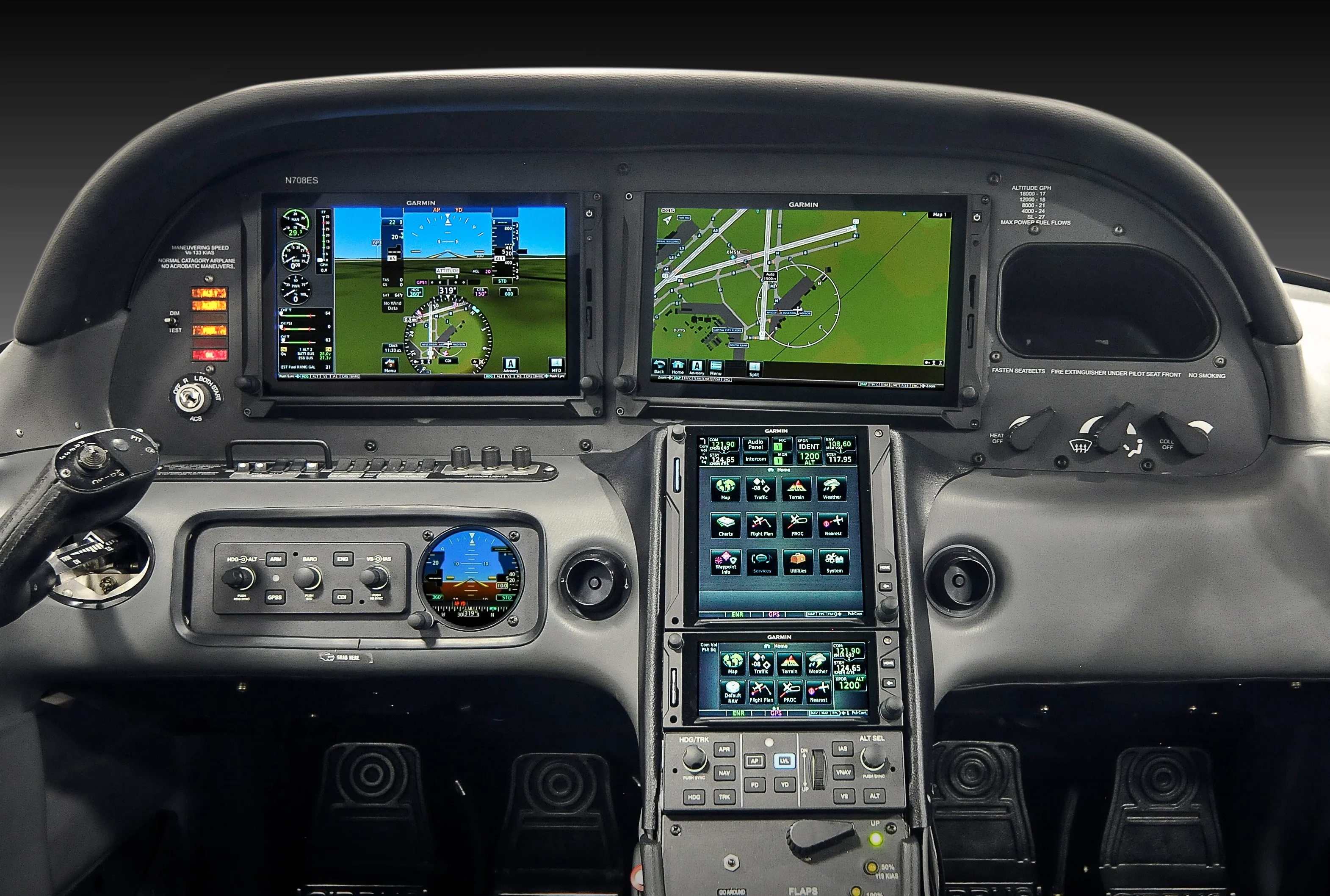
Beyond the physiological challenge, instrument flying demands a significantly higher cognitive workload. You are simultaneously managing aircraft attitude, monitoring two or more navigation sources, communicating with ATC on a consistent basis, tracking your clearance, planning ahead for approaches, and managing fuel and weather. The pilots who excel in IFR conditions are not necessarily those with the fastest reflexes — they are those who have learned to prioritize, sequence tasks effectively, and stay ahead of the aircraft at all times.
Instrument training under professional flight school instruction is specifically designed to build these habits systematically, so that by the time a pilot sits for an instrument rating checkride, managing that workload feels natural rather than overwhelming.
The foundation of all instrument flying is the instrument scan — the technique by which a pilot's eyes move across the flight instruments in a controlled, continuous pattern to build an accurate mental picture of the aircraft's state. Developing a reliable, efficient scan is the single most important mechanical skill in instrument flying, and it takes deliberate, focused practice to master.
Modern instrument flight instruction typically uses the primary and supporting instrument method, which identifies one instrument as the primary reference for each specific flight parameter at any given moment, with supporting instruments providing backup confirmation.
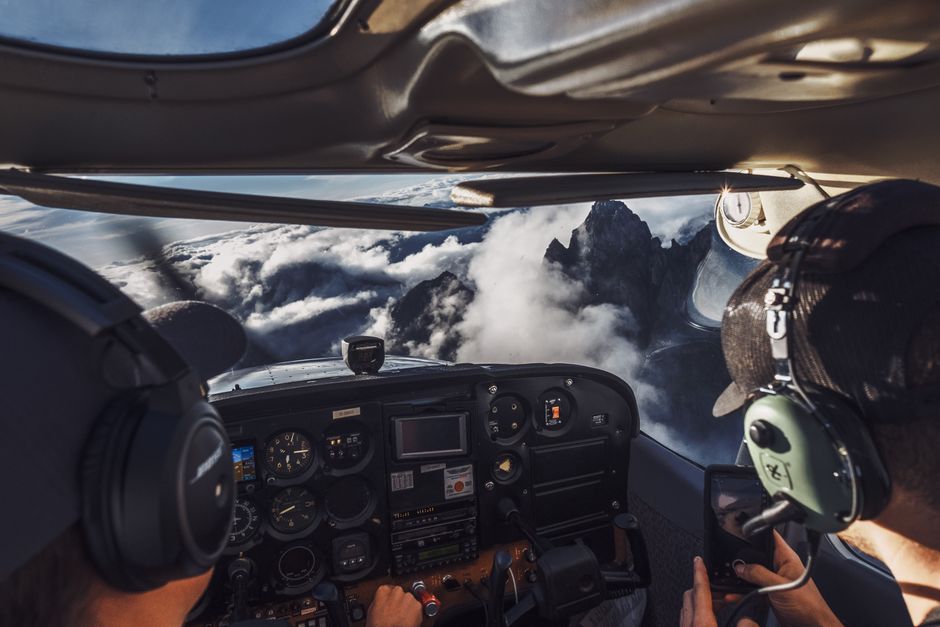
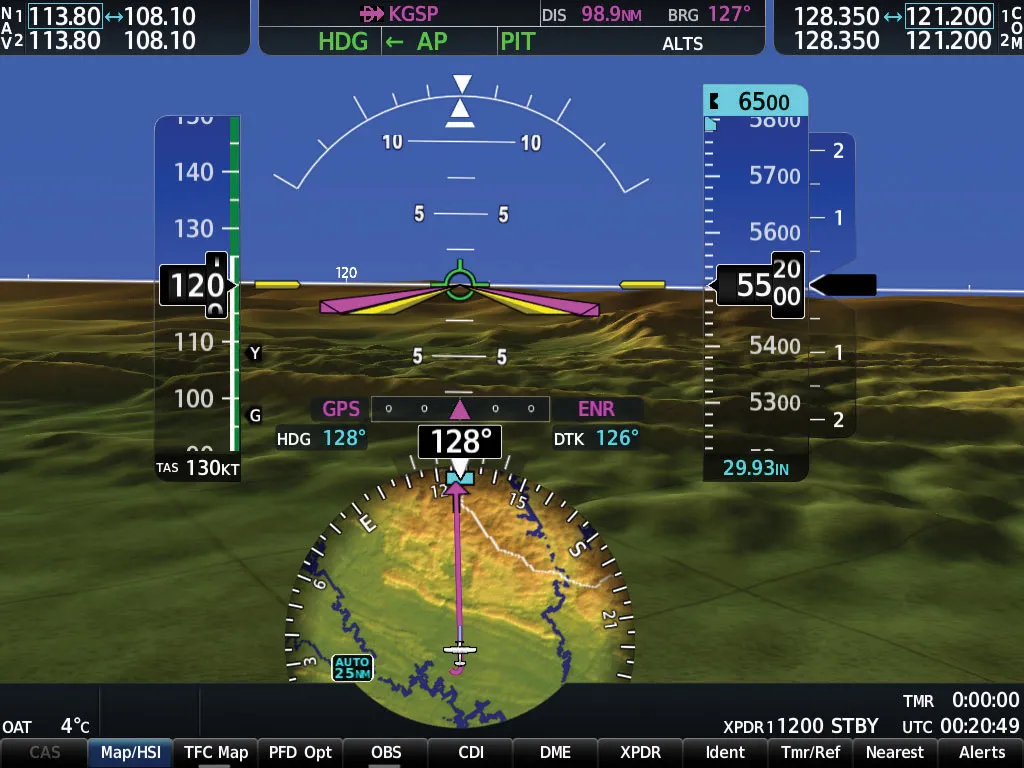
The attitude indicator — the gyroscopic instrument that shows a miniature aircraft against an artificial horizon — functions as the control instrument for both pitch and bank, meaning it shows you what inputs to make. It is consulted constantly during any change of attitude, then cross-checked against the primary instruments for confirmation.
Even students who understand the theory of the scan make predictable errors during early instrument training. Recognizing these patterns early accelerates learning considerably.
Spatial disorientation is responsible for a significant proportion of fatal general aviation accidents, and it is a risk that affects pilots at every experience level. The human vestibular system — the organs in the inner ear that detect motion and orientation — evolved long before powered flight. It is simply not designed to reliably detect the gradual, sustained accelerations that occur in an aircraft.
The most well-known manifestation of spatial disorientation is the leans — a persistent false sensation of bank that causes a pilot to feel tilted even when the wings are perfectly level. More dangerous is the graveyard spiral, in which a pilot in an undetected banked turn senses only a descent and pulls back on the controls, tightening the spiral and accelerating the descent. Without instrument flying skills, there is no reliable way to recover from this situation.
Instrument training directly addresses spatial disorientation by building the habit of trusting the attitude indicator and supporting instruments absolutely, even when physical sensations insist otherwise. This is not a lesson that can be learned from a book — it must be practiced repeatedly in actual simulated conditions until the correct response becomes automatic.
Beyond the scan and the physiological challenges, instrument flying requires a structured approach to cockpit workflow that VFR pilots often find unfamiliar at first. Flying an IFR flight is not simply a matter of pointing the aircraft at a destination and staying in the clouds — it involves an integrated sequence of planning, clearance management, ATC communication, and approach execution that must flow smoothly even when conditions are demanding.
Every IFR flight begins with a detailed preflight that goes well beyond what most VFR pilots are accustomed to. You must obtain a full weather briefing, file an IFR flight plan, understand your departure procedure, identify your destination approach options, select an alternate airport if required by regulations, and confirm that your aircraft's avionics and instruments are legally current and functional. Building a solid, repeatable preflight routine is the first step toward becoming a reliable instrument pilot.
IFR flight places you in direct, continuous coordination with Air Traffic Control. Clearances must be read back accurately, amended clearances must be integrated into your mental picture immediately, and position reports or check-ins must be made at appropriate points. For pilots accustomed to VFR flight where ATC contact is often optional, this sustained coordination represents a meaningful adjustment — and one that rewards pilots who invest time in radio procedure training early.
The instrument approach procedure is the pinnacle of IFR skill — a precisely flown sequence that brings the aircraft from the en route environment down to a point where either the runway environment is sighted visually or a missed approach must be executed. Whether you are flying an ILS (Instrument Landing System) approach with full lateral and vertical guidance or a GPS approach with a step-down profile, the discipline required is demanding and exhilarating in equal measure.
Students who pursue their commercial pilot training after earning an instrument rating consistently report that instrument approach work was among the most challenging and most rewarding training they completed — and that the precision habits it built carried over beneficially into every other phase of their flying.
At Savannah Aviation, instrument rating training is structured to build competence and confidence in equal measure. Students begin with foundational cockpit instrument familiarization and scan development before progressing to partial-panel flight, unusual attitude recovery, navigation under the hood, and full IFR procedure work including holds, approaches, and missed approach procedures.
The FAA requires a minimum of 50 hours of cross-country flight time as pilot in command and 40 hours of actual or simulated instrument time to be eligible for an instrument rating — though most students complete training in somewhat more time as they work toward genuine mastery rather than minimum compliance. Every hour spent under the hood with a qualified instructor builds the kind of real-world capability that makes pilots genuinely safer throughout their entire careers.
If you are ready to take your flying to the next level, there is no better time to begin. Instrument flying will challenge you, develop your discipline, and open doors to flying opportunities that remain closed to VFR-only pilots. Reach out to Savannah Aviation at (912) 964-1022 and let our team help you chart the path forward.
Request a personalized discovery flight and experience how professional instruction and careful preparation make learning to fly exciting and rewarding. Our team guides every step to help you build skills safely and confidently.
.webp)





.webp)